 More than +1 Million customers put their trust in us | INSTANT-DELIVERY

Cart is empty
 Our Brands












Microsoft windows
There are no products in this section
Introduction
Microsoft Windows is a collection of several exclusive families of graphical operating systems, all of which Microsoft designs and introduces. For a certain segment of the computing industry, each family caters. The graphical operating system developed and released by Microsoft is Microsoft Windows (also referred to as Windows or Win). This offers a way to save documents, run apps, play games, watch videos, watch Netflix and connect to the Internet. On November 10, 1983, Microsoft Windows released version 1.0 for the first time. After that, over a variety of versions of Windows, including the latest edition, Windows 10, were launched. A window is generally a fundamental part of a Microsoft software GUI ( graphical user interface) that is developed, sold and marketed. A window is a region of the monitor that includes a single program that is running. As desired by the consumer, the window can be shifted, resized, concealed or maximized. The operating system of Microsoft Windows is called after this feature of the UI element. Windows 10 is the newest version of the Microsoft Operating System that is commonly used in the world. Microsoft Windows is a Microsoft-produced community of OSs. Offering a graphical user interface ( GUI), multitasking features, virtual memory management functionalities, and support for many peripheral devices, Windows is available in 32 and 64-bit versions. Windows OSs are variants of clients as well as servers. For many various reasons, people all over the world rely on Windows OS. Here are a handful of things that we are proud to continue to deliver. Windows 10 has technologies that help you concentrate and develop, from touch screen support to functionality. Windows 10 comes with an extensive antivirus , firewall, ransomware, and internet features. Windows OS, the most common PC gaming platform on the planet, has a wide range of games available. Windows is built for each of us. Windows OS often adapts to you, whether you have a disability, a personal taste, or a special work style. Windows OS has features that enable you to be more innovative and efficient, and is fundamentally quick and familiar, safe and stable. Windows is optimized for the way you operate if you run a small business and want improved functionality. The virtual memory of Windows is much more powerful than that of Macs. It will run slow on a PC running low on memory, but it won't break down. A low-memory Mac is much more likely to crash. This means you need less RAM on a machine running Windows to make sure it's stable.
The reason why is Microsoft Windows called “Windows”?
The MS-DOS single task command line operating system was used by Microsoft users prior to the release of Microsoft Windows. It required a word that better represented its new Interface operating system, since Microsoft calls most of its products with one word. Because of the multiple windows that allow various tasks and programs to run at the same time, Microsoft chose 'Windows'. "Since a common name like" Windows "can not be trademarked, it is legally known as" Microsoft Windows. In 1985, the first edition of Microsoft Windows was launched.
Development of windows OS
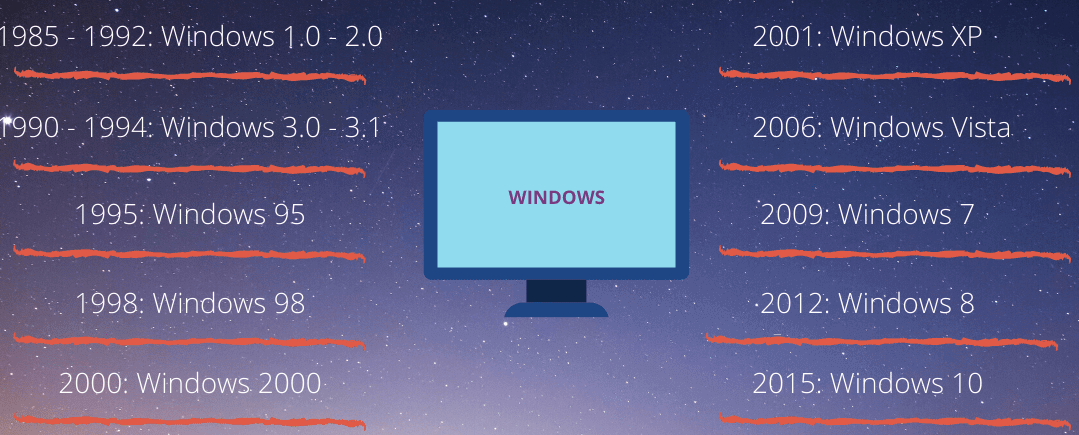
The below image shows the different Microsoft Operating Systems along with the year in which they were introduced:
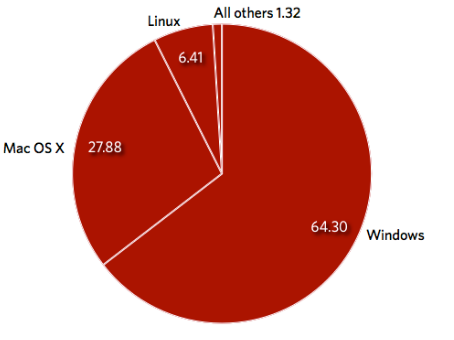
Percentage of use of Windows OS
Top practical versions of Microsoft Windows OS
Let us understand the most used versions of Windows Operating System
Windows 7
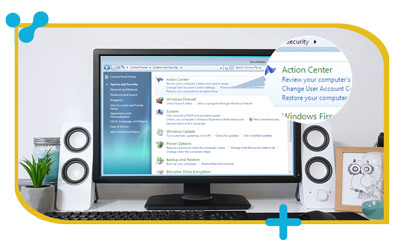
On October 22, 2009, Windows 7 was launched. There are a wide range of new features added to this OS. The Windows shell with an improved taskbar has been revamped with incremental improvements to the Windows line. Libraries have been added to the file management system and a few functionalities have been omitted from the previous Windows system. Windows 7 Operating System has extended hardware support. Available in four different versions which are Windows7 Professional, Windows 7 Home Premium, Windows 7 Ultimate, Windows 7 Enterprise.
Windows 8.1
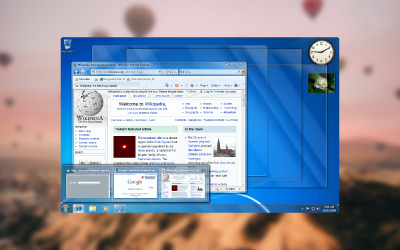
On August 27, 2013, Windows 8.1 was announced. For touch-based computers, this great OS has faced many optimization techniques. It can be mounted on new computers, such as desktops and laptops. Windows 8.1 has improved integration for app delivery for cloud storage and Windows Store services. The Task Manager has been revamped and new security features have been incorporated. Online software can also be easily accessed directly. Available in three different versions which are Windows 8.1 Pro, Windows 8.1 Enterprise, windows 8.1 Home.
Windows 10
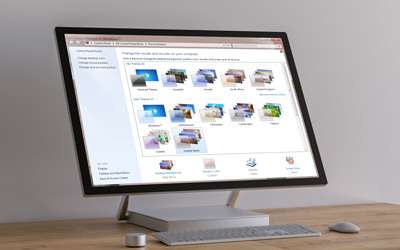
On July 29 , 2015, Windows 10 was released. It tackles user interface shortcomings that were first implemented with Windows 8. With the ability to run Windows Store apps on the desktop rather than in full-screen mode, a virtual desktop system has been introduced. This current OS features new icons, and Windows 10 also instantly compresses the file size and is able to reduce storage limitations. Available in ten different versions which are Windows 10 Pro, Windows 10 Pro N, Windows 10 Home, Windows 10 Home N, Windows 10 Education, Windows 10 Enterprise, Windows 10 Enterprise LTSB 2016, Windows 10 Enterprise LTSC 2019, Windows 10 Pro For Workstation.
Applications in Windows ?
All sorts of software are available in the Microsoft Windows store and can be easily accessed and downloaded for personal or professional use by individuals.
check below the list of some application available on Windows:
- Games
- Web Browsers
- Adobe Photoshop
- Adobe Reader
- Messenger
- Media Players
- Audio/ Video Chatting Apps
- Maps & Calendar and much more
What are the features of Microsoft Windows ?
To help get the most out of Windows and your device, Microsoft Windows offers a wide variety of features, software , and applications. Let’s have a look at the major feature of Microsoft Windows Operating System:
Control Panel
The Control Panel is a set of software to enable you to configure your computer's resources and manage them. You can change your printer, camera, audio, mouse , keyboard, date and time settings, user accounts, apps enabled, network connections, options for power savings, and much more. .
Cortana
Introduced in Windows 10, Cortana is a virtual assistant which accepts voice recognition and commands. Cortana is able to answer questions, check your device or Internet, set appointments and reminders, make transactions online, and more. Cortana has similarities to other voice-enabled services, such as Siri , Alexa, or Google Assistant, with the added advantage of being able to search your device for details.
Desktop
In Windows, the desktop is a basic component of the default GUI ( graphical user interface). It is a space where applications, files, and documents which appear as icons can be organized. Your desktop is still in the background, behind every other running app. The first thing you see when you turn on your device and log into Windows is your screen image, icons, and taskbar. From here, from the Start menu, you can access the software installed on your computer, or by double-clicking any software shortcuts you might have on your screen.
Device Manager
The System Manager lists installed hardware devices on a computer. This allows users to see what hardware is installed, display and upgrade hardware drivers, and use the System Manager to uninstall hardware.
Disk Cleanup
By deleting temporary or unused files, the Disk Cleanup utility actually increases free disk space on your computer. Running Disk Cleanup helps boost the efficiency of your device and provides extra space for downloads, documents, and programs to be stored.
Internet browser
One of the most significant software on your machine is your Internet browser. You can use this to find information, browse web pages, shop and purchase products, watch videos, play games, and more on the Internet. Microsoft Edge is Windows 10's default browser. In earlier versions of windows, from Windows 95 to Windows 8.1, Internet Explorer was used as the default browser.
Microsoft Paint
Since November 1985, Microsoft Paint has been included in Windows and is a simple image editor that you can use to develop, display, and edit digital images. It offers basic features for drawing and painting images, resizing and rotating images, and saving images as distinct types of files.
Notification area
The notification area, also referred to as the device tray, shows the date and time, and displays program icons that are started on Windows. It also does provide the status of your Internet connection and a speaker icon for sound volume adjustment.
Settings
Settings are available for Windows 8 and Windows 10 and enable you to modify several aspects of Windows. You can change the background of the desktop, alter power settings, check external system choices, and more.
Taskbar
The Windows Taskbar displays programs that are currently open and a Fast Launch area that enables specific programs to be opened with quick access. On the right side of the taskbar, the notification area displays the date and time and applications running in the background.
Task Manager
A summary of what's running on your machine is provided by the Task Manager. You can see just how much your machine resources are used, sorted by CPU , RAM, and disk I / O use, by each application (task). In the Task Manager, if a program is frozen or not responding, you can right-click it and terminate the task, forcing it to exit.
Windows search box
The Windows search box is a simple way for documents, photographs , videos, games, and more to be searched. In Windows 10, Cortana also incorporates the search box. In Windows Vista, the feature first showed up.
System Information
The Device Information utility gives information, including hardware and Windows data, about the machine. Information about the hardware of your machine can be found, including the processor , memory, video card, and sound card. You can also display and customize variables, system drivers, utilities, and more for the system.
Registry Editor
You can access the Windows system registry and modify the registry keys using the Registry Editor. In order to fix problems with the Windows operating system or installed software , computer professionals can use the Registry Editor.
Power User Tasks Menu
The Power User Tasks Menu, available in Windows 8 and Windows 10, offers easy access to useful and important Windows services. You can open the Control Panel, System Manager, File Explorer, Task Manager and more from this menu.
The Notepad tool
The Notepad is a straightforward text editor. You can create, access, and edit text files using it. For example , you can write a batch file using Notepad, or a web page written in HTML.
Conclusion
Microsoft Windows Operating System has been successful for ages. It is considered as the most necessary software to run on a computer. Windows manages the computer's memory and processes, as well as all of its software and hardware. It also allows you to communicate with the computer without knowing how to speak the computer's language. Windows operating systems serve as a base for computer programs. The OS controls the system's hardware, making it so internal components and peripherals work across all programs.